Why Are Some Deserts Cold Instead of Hot? Explained?
Some Deserts Cold Instead of Hot may sound like a contradiction, but the explanation is straightforward: a desert is defined by limited precipitation, not by high temperature. Antarctica, the Gobi Desert, and many high-altitude regions receive so little moisture that they qualify as deserts even when snow, ice, or freezing air dominates the landscape. Temperature, latitude, elevation, cloud cover, and atmospheric circulation all shape the result.
Once those factors are separated from rainfall, cold deserts make perfect sense. The contrast also reveals why a dry place can feel brutally cold at night, remain frozen for months, or experience sharp seasonal swings.
The Short Answer: Dryness Matters More Than Heat
Some deserts are cold instead of hot because desert status depends primarily on how little precipitation an area receives, not on whether its average temperature is high. A region can be covered in snow and still be a desert if annual snowfall and rainfall are too low to support abundant vegetation.
Hot deserts, such as the Sahara, receive intense solar radiation but very little rain. Cold deserts receive similarly limited moisture, yet their temperatures are lowered by factors such as polar latitude, high elevation, persistent snow and ice cover, or a continental climate. The shared feature is aridity.
Antarctica is the clearest example. Although much of the continent is buried beneath ice, the interior gets so little new precipitation that it is classified as a polar desert. The snow accumulates slowly because the air is extremely cold and holds very little water vapour.
The same principle applies to the Arctic Desert and parts of the Gobi Desert. The Arctic has low temperatures because it lies far from the equator and receives a low solar angle, while the Gobi combines northern latitude, winter air masses, and a continental position far from moisture-rich oceans.
Rainfall alone doesn’t tell the whole story, either. Scientists also consider evaporation, seasonal moisture, and the ability of plants to use available water. A place with modest precipitation may still be arid if strong winds, dry air, and summer heat remove moisture quickly.
This distinction explains why the word “desert” describes climate rather than scenery. Sand dunes are common in some hot deserts, but they are not required. Frozen plains, rocky plateaus, gravel fields, and snow-covered basins can all belong to desert environments.
Latitude Controls the Sun’s Heating Power
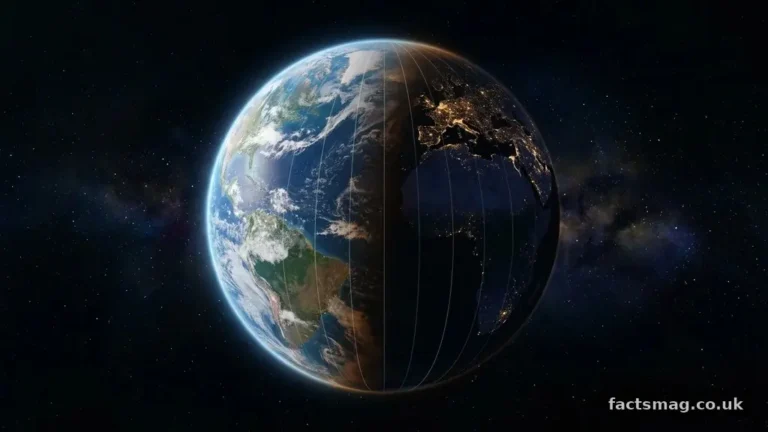
Latitude is one of the strongest reasons polar deserts remain cold. Near the equator, sunlight arrives from a relatively high angle and concentrates energy onto a smaller surface area, while near the poles, the same solar energy is spread across a wider area.
A low solar angle also forces sunlight to travel through more of the atmosphere before reaching the ground. Air, dust, clouds, and atmospheric gases absorb or scatter part of that energy, so less reaches the surface as useful heat.
Seasonal darkness makes the difference even larger. Parts of Antarctica experience weeks or months without direct sunlight during winter, and the Arctic has a similar polar night. With no incoming solar radiation for long periods, the surface steadily loses heat to the atmosphere and space.
Summer sunlight doesn’t automatically make a polar desert warm. At high latitudes, the Sun can remain above the horizon while still hovering low in the sky, producing weak heating compared with nearly overhead tropical sunshine. A long day can therefore provide less surface warming than a shorter day at a lower latitude.
Earth’s curvature is central to this pattern. The planet receives sunlight across a spherical surface, so the angle of arrival changes from the tropics to the poles. Latitude doesn’t determine every local temperature, but it establishes the broad energy pattern that makes polar environments cold.
Solar radiation is also affected by the surface itself. Snow and ice reflect a large share of incoming sunlight, creating an albedo effect that prevents much of the energy from being absorbed. Dark rock absorbs more, but a bright snowfield reflects energy back upward and remains difficult to warm.
These processes reinforce one another. Cold air holds little moisture, low temperatures limit evaporation, and reflective snow keeps the ground cool. The result is a landscape that can stay extremely dry even though frozen water is visibly present.
Why Antarctica Is Earth’s Largest Cold Desert
Antarctica is often imagined as an endlessly snowy place, but its interior is also the world’s largest desert by area. The continent’s central ice sheet receives very little annual precipitation, and much of that precipitation falls as fine snow rather than rain.
The cold air above the interior is exceptionally dry because chilled air cannot hold much water vapour. Moisture-bearing air from the Southern Ocean has difficulty travelling deep into the continent, especially as mountain ranges and atmospheric circulation remove moisture closer to the coast.
Katabatic winds add another striking feature. Air cooled over the high Antarctic plateau becomes dense and flows downhill toward the coast, sometimes producing powerful, dry winds. These winds can scour exposed surfaces and increase evaporation or sublimation, in which ice changes directly into vapour.
Antarctica’s elevation matters too. The East Antarctic Ice Sheet rises more than 3,000 metres above sea level in many areas, and temperatures generally fall as altitude increases. A high surface combined with polar latitude creates an exceptionally cold environment.
Some Antarctic interior locations receive only a very small amount of precipitation each year, although exact totals vary by region and measurement method. The coastal margins are generally snowier because they are closer to ocean moisture, while the interior is drier and more desert-like.
The ice doesn’t contradict the desert classification. Most of the ice formed from snowfall over very long periods, compacting under its own weight. Present-day precipitation can be sparse even when ancient snowfall remains stored in a massive ice sheet.
Readers can explore how scientists describe polar climate zones through the United States Geological Survey’s overview of deserts. The key idea is consistent: aridity is measured through water availability, not visual impressions of sand or heat.
Antarctica therefore demonstrates the central rule better than any other place. A landscape can be white, frozen, and still qualify as a desert because the atmosphere supplies so little new moisture.
High-Altitude Deserts Lose Heat Quickly
High-altitude deserts are cold for a different but related reason. As elevation rises, atmospheric pressure decreases, and the air generally becomes cooler. Mountain plateaus can therefore be dry because of surrounding terrain while also remaining cold because they sit far above sea level.
The Tibetan Plateau is a major example of a high, cold region with extensive arid and semi-arid environments. The plateau’s elevation exposes it to strong winds, thin air, intense sunlight, and large temperature changes between day and night.
High mountains can also create a rain shadow. Moist air rises along a mountain’s windward side, cools, and releases precipitation. Once the air descends on the leeward side, it is drier, producing an arid zone that may stretch across a broad basin or plateau.
The Andes help shape the climate of the Patagonian Desert. Moisture from the Pacific is lifted over the mountains, leaving descending air east of the range comparatively dry. Patagonia is not uniformly frozen, but its winds, latitude, and rain-shadow position make many areas much cooler than classic subtropical deserts.
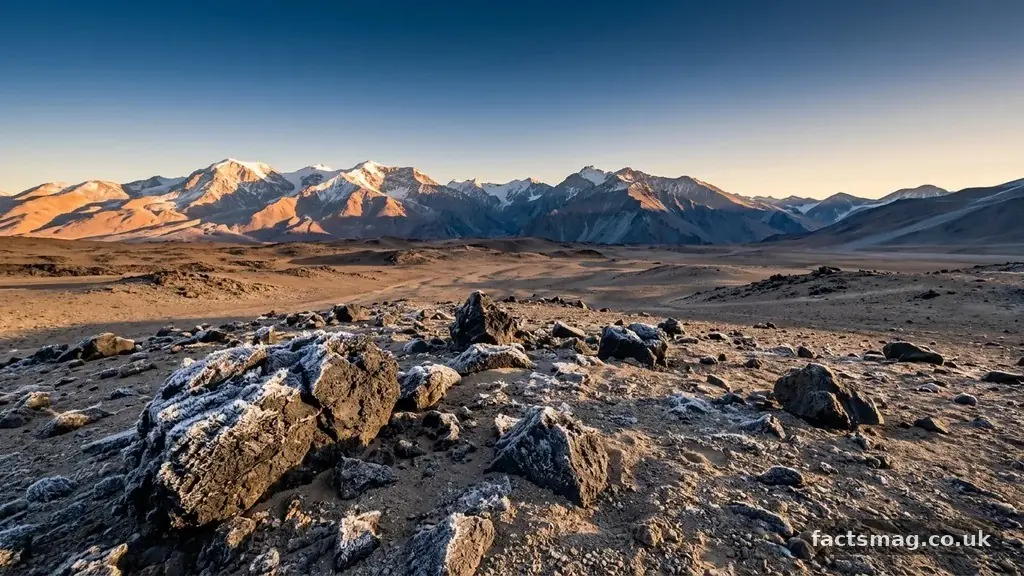
Elevation changes the way sunlight and heat behave. Thin air allows strong solar radiation to reach the ground during the day, yet it contains fewer molecules to absorb and redistribute heat. Once the Sun sets, the surface can lose energy rapidly through infrared radiation.
That combination produces dramatic daily temperature ranges. A rocky plateau may feel surprisingly warm in direct afternoon sunlight, then become bitterly cold after sunset. The air has limited moisture and cloud cover, so little heat is retained near the surface.
High-altitude deserts can also receive snow even when their summers are dry. A brief storm may whiten the ground, but intense sunshine, wind, and sublimation can remove the snow without creating lasting streams or wetlands.
For people and animals, these conditions create a difficult balance. Strong ultraviolet exposure, dehydration, freezing nights, and sudden weather shifts can occur within the same day. Adaptations must address both heat from sunlight and cold from the surrounding air.
Oceans, Currents, and Rain Shadows Keep Deserts Dry
Cold deserts are not cold only because of latitude or elevation. Their dryness often comes from the way oceans, mountain ranges, and atmospheric circulation move moisture around the planet.
On some western continental margins, cold ocean currents chill the air above the sea. Cooler air holds less water vapour and may produce coastal fog rather than rain. If a stable layer of air prevents that moisture from rising, the nearby land can remain extremely dry.
The Atacama Desert is a famous example of coastal aridity, although it is generally considered a cold or cool desert rather than a polar desert. The cold Humboldt Current, subtropical high-pressure systems, and the Andes all limit rainfall across parts of northern Chile and southern Peru.
A rain shadow adds a second barrier. When air rises over a mountain range, it cools and loses moisture on the first side. Air descending beyond the crest warms and dries, suppressing clouds and precipitation in the basin or plain below.
Atmospheric circulation creates broad zones where air sinks rather than rises. Descending air becomes compressed and warmer, reducing relative humidity and making cloud formation difficult. This pattern helps explain many subtropical deserts, while different circulation patterns contribute to polar dryness.
The Gobi Desert shows how distance from the ocean can matter. Much of it lies deep within Asia, far from major moisture sources, and surrounding mountains restrict the movement of humid air. Its winters can be severely cold, even though parts of the desert become hot during summer.
Dryness therefore has several possible causes. A desert may be isolated from oceans, sheltered behind mountains, positioned beneath sinking air, cooled by a current, or exposed to polar conditions. In some locations, several of these causes operate at the same time.
That variety is why deserts differ so much in appearance and weather. The common denominator is a persistent shortage of usable moisture, not a single temperature pattern or a particular kind of ground cover.
Cold Deserts Can Have Hot Days and Freezing Nights
“Cold desert” doesn’t mean every hour is freezing. Many cold deserts experience strong seasonal or daily contrasts, with bright, relatively warm afternoons followed by very cold nights.
The reason is mainly low humidity. Water vapour is a greenhouse gas that absorbs some of the infrared energy released by Earth’s surface. In dry air, less heat is held close to the ground after sunset.
Clouds provide another form of insulation. A cloudy night often stays milder because clouds absorb and re-emit some outgoing heat. Cold deserts commonly have clear skies, so the surface can radiate energy directly into the atmosphere and beyond.
Ground conditions intensify the change. Bare rock, gravel, and dry soil can heat quickly under direct sunlight, while snow and ice reflect much of that energy. A dark patch of exposed ground may become noticeably warmer than a nearby snowfield under the same sky.
Wind then redistributes the available heat. A cold, dry wind can strip warmth from exposed skin and increase the rate at which moisture evaporates. Wind chill doesn’t lower the actual air temperature, but it makes conditions feel colder by accelerating heat loss from the body.
Seasonal differences can be equally sharp. The Gobi Desert may experience hot summer afternoons but deep winter cold because its continental climate lies far from the temperature-buffering influence of the ocean.
The table below compares several desert environments and the main reason each can be cold or cool. These categories overlap, so one desert may appear in more than one climate story.
| Desert environment | Main cooling influence | Typical defining feature |
|---|---|---|
| Antarctic interior | Polar latitude, elevation, snow albedo | Very cold, ice-covered, extremely dry |
| Arctic Desert | High latitude and long winter darkness | Frozen ground, low precipitation, short summers |
| Gobi Desert | Continental location and northern latitude | Large seasonal temperature range |
| Patagonian Desert | Rain shadow, latitude, strong winds | Dry steppe and cool, windy conditions |
| High-altitude deserts | Elevation and thin, dry air | Warm sun, cold nights, sudden weather shifts |
The table is a useful reminder that “cold” describes the climate’s overall character, not necessarily every daytime temperature. A place may combine intense sunlight with freezing air because sunlight, humidity, elevation, and heat retention are separate variables.
How Plants and Animals Survive in Cold Deserts
Life in a cold desert faces a double challenge: water is scarce, and the water that exists may be locked in ice. Organisms must either obtain moisture during short thaw periods or function with very little liquid water.
Plants in the Arctic Desert often grow low to the ground. This shape reduces exposure to wind and helps the plant benefit from slightly warmer air near the surface. Mosses, lichens, grasses, and small flowering plants may complete growth and reproduction during a short summer.
Antarctica supports far less terrestrial plant life in its deep interior. Along milder coastal areas, lichens, algae, and a small number of flowering plants can survive, but the ice sheet itself offers almost no soil and an extremely short growing season.
Animals use different strategies. Some migrate into cold desert regions only during the productive season, while others grow dense insulation or shelter in burrows and rock crevices. Arctic foxes, for example, change coat characteristics across seasons, helping them cope with both camouflage and insulation demands.
Water conservation is essential. Small desert animals may obtain moisture from food, reduce activity during the coldest periods, or produce concentrated urine and dry waste. Insects and microscopic organisms can enter dormant states when liquid water is unavailable.
Cold doesn’t always protect these ecosystems from climate stress. A small increase in temperature can alter the timing of snowmelt, expand vegetation into newly exposed ground, or change which species compete for limited resources.
In polar deserts, snow and ice cover also control habitat availability. When darker ground appears, it absorbs more solar energy, which can encourage further melting in a local feedback process. That albedo effect is one reason a seemingly small surface change can influence an entire patch of terrain.
- Low-growing forms: mosses, lichens, and grasses avoid the strongest winds and conserve heat near the ground.
- Seasonal timing: plants grow, flower, and produce seeds quickly during brief periods with liquid water.
- Insulation: animals use fur, feathers, body fat, or underground shelters to reduce heat loss.
- Dormancy and migration: organisms avoid the harshest conditions by becoming inactive or moving to more favourable areas.
- Water conservation: many species rely on food moisture or limit activity when water is frozen.
These adaptations show that cold deserts are not lifeless wastelands. Their communities may be sparse and highly seasonal, but each species reflects a precise response to cold, dryness, wind, and limited sunlight.
Cold Desert Weather Is Different From Hot Desert Weather
Hot and cold deserts share aridity, yet their weather systems can feel completely different. A hot desert often has intense summer heating and occasional thunderstorms, while a cold desert may have snowstorms, freezing fog, or long periods of calm, clear weather.
In hot deserts, convection can lift heated air and build thunderstorms when moisture arrives. Cold deserts have less surface heating and less atmospheric moisture, so precipitation is often lighter and more intermittent.
Snow can be the main form of precipitation in polar regions. Because cold air holds little vapour, even a small snow event may represent a meaningful addition to the annual water budget. Meltwater can briefly support plants, microbes, and small pools during summer.
Wind is especially important in open cold deserts. There may be few trees or tall shrubs to slow it, and frozen ground can remain exposed across broad areas. Blowing snow may reduce visibility, while dry katabatic winds can make conditions hazardous even without heavy snowfall.
Ground frost and permafrost also shape the landscape. Water in the soil can remain frozen for years or centuries, restricting root growth and preventing deep drainage. During a short thaw, only the upper active layer may become workable for plants.
Hot deserts can also have freezing nights, so the contrast should not be exaggerated. The difference is that cold deserts spend more of the year under the influence of low solar energy, frozen surfaces, or cold air masses.
Weather records should therefore be interpreted alongside climate averages. One warm afternoon doesn’t turn the Gobi into a tropical environment, just as one snow-free day doesn’t disqualify Antarctica from being a polar desert.
That distinction is useful for travellers, field researchers, and students. Clothing, navigation, water planning, and emergency preparation must account for rapid changes rather than relying on the word “desert” to imply heat.
Frequently Asked Questions
What makes a desert a desert?
A desert is defined by persistent aridity, meaning precipitation is low compared with the area’s potential water loss and ecological needs. It doesn’t have to be hot, sandy, or completely barren.
Is Antarctica really a desert?
Yes. Much of Antarctica qualifies as a polar desert because the interior receives very little annual precipitation. Its thick ice formed over long periods, so the presence of ancient ice doesn’t mean the current climate is wet.
Why is the Gobi Desert cold in winter?
The Gobi lies at a relatively high northern latitude and deep inside Asia, far from the moderating influence of oceans. Its continental climate allows temperatures to swing sharply between seasons, producing very cold winters and warm or hot summers.
Can a cold desert have warm days?
Yes. Clear skies and strong direct sunlight can warm exposed rocks or soil during the day, especially at high elevation. After sunset, dry air and limited cloud cover allow heat to escape quickly, so temperatures may fall dramatically.
Are all polar regions deserts?
No. Polar regions can include tundra, glaciers, ice caps, and areas with enough precipitation to fall outside desert classifications. The Arctic Desert and dry interior Antarctica qualify because their moisture supply is exceptionally limited.
Why Some Deserts Stay Cold
Some Deserts Cold Instead of Hot because temperature and precipitation are controlled by different parts of Earth’s climate system. Polar latitude, low solar angle, snow’s albedo effect, high elevation, rain shadows, cold ocean currents, and continental distance can all suppress warmth or moisture.
Antarctica makes the idea vivid, while the Gobi Desert, Patagonian Desert, Arctic Desert, and high-altitude deserts show that cold aridity can develop in several ways. The next time you see a frozen plain described as a desert, look past the snow: the defining fact is how little new water the atmosphere delivers.