What Makes the Moon Look Different Throughout the Month?
What makes the Moon look different throughout the month is its changing position relative to Earth and the Sun. The Moon doesn’t produce its own visible light; it reflects sunlight, and we see different portions of its sunlit half as it travels through its lunar orbit. That changing view creates the familiar Moon phases, from a barely visible new moon to a bright full moon and back again.
The pattern is predictable, yet it can still feel magical. Once you understand the Earth–Moon–Sun alignment, the terminator line, and the timing of the lunar cycle, each evening sky becomes easier to read.
The Simple Answer: Moonlight Is Sunlight
The Moon looks different because sunlight always illuminates half of it, while the Moon’s position around Earth determines how much of that bright half faces us. The Moon itself is not changing shape, shrinking, or being physically covered during the regular cycle of phases.
At any moment, one side of the Moon faces the Sun and receives daylight. The opposite side is dark, much like Earth has day on one side and night on the other. From Earth, however, we see changing proportions of the illuminated half as the Moon moves along its lunar orbit.
This is the direct answer to what makes the Moon look different throughout the month: changing sunlight reflection combined with changing geometry. Earth, the Moon, and the Sun continually shift into different positions relative to one another.
During a new moon, the Moon lies roughly between Earth and the Sun, so its sunlit side faces away from us. At full moon, Earth is approximately between the Sun and Moon, allowing us to see nearly the entire illuminated side.
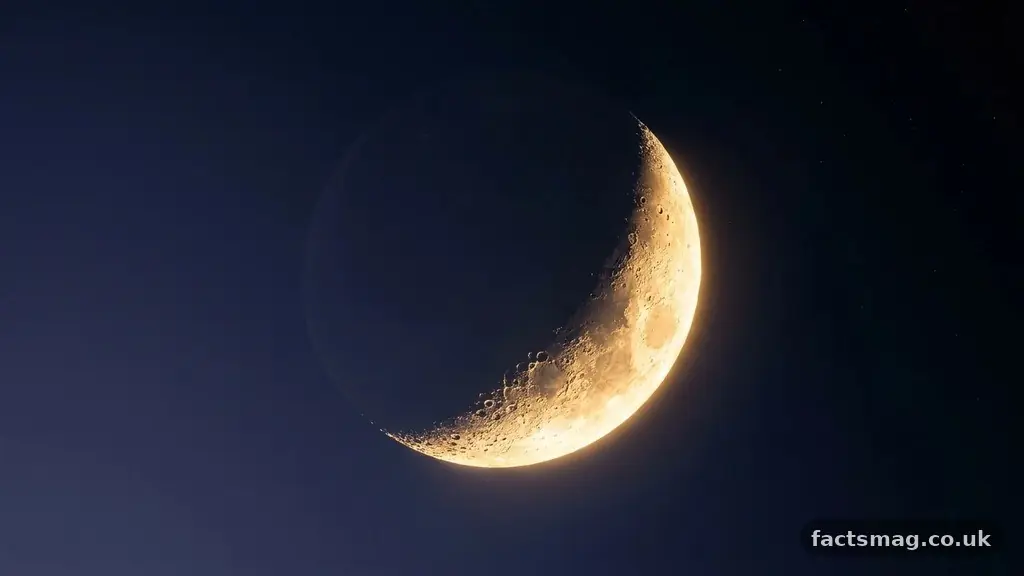
The Moon doesn’t actually become brighter because it has gained light. A full moon appears brighter because the portion facing Earth is almost completely sunlit, while a crescent shows only a slim section of the same illuminated hemisphere.
How the Earth–Moon–Sun Alignment Creates Phases
The Moon phases are a visual record of the Moon’s position in space. Imagine looking down from above Earth’s North Pole: the Moon circles Earth, and the Sun lights one half of it throughout the journey.
When the Moon is near the line between Earth and the Sun, the illuminated side points mostly away from Earth. As it moves onward, a narrow bright edge becomes visible, then a larger section, until the full moon appears on the opposite side of Earth from the Sun.
The changing boundary between lunar day and lunar night is called the terminator line. It is not a physical mark on the Moon; it is the moving edge of sunrise or sunset across the lunar surface.
That line explains why the Moon’s craters can look especially dramatic near the first quarter moon. The low-angle sunlight near the terminator creates long shadows across mountains, valleys, and crater rims, making surface features stand out more clearly through binoculars or a telescope.
The Moon’s orbit is slightly tilted compared with Earth’s orbit around the Sun. Because of that tilt, the Moon usually passes a little above or below the Sun in the sky during a new moon and a little above or below Earth’s shadow during a full moon.
Only when the alignment is especially precise does an eclipse occur. A solar eclipse happens near a new moon, while a lunar eclipse happens near a full moon, but these events are not part of every monthly cycle.
The Eight Main Moon Phases
People commonly divide the lunar cycle into eight named phases. Four are principal phases—new moon, first quarter, full moon, and third quarter—while four describe the growing or shrinking transitions between them.
- New moon: The Moon’s sunlit side faces mostly away from Earth, making it difficult or impossible to see under ordinary conditions.
- Waxing crescent: A thin sliver becomes visible shortly after sunset, and the illuminated portion grows each night.
- First quarter moon: About half of the Moon’s visible disk is illuminated, even though the Moon is one-quarter of the way through its phase cycle.
- Waxing gibbous: More than half of the visible disk is bright, and the Moon is approaching full moon.
- Full moon: Nearly the entire Earth-facing side is illuminated by sunlight.
- Waning gibbous: The illuminated portion begins to shrink after full moon, although most of the disk remains bright.
- Third quarter moon: Half of the visible disk is illuminated again, but the opposite side is bright compared with the first quarter phase.
- Waning crescent: A narrowing sliver remains before the cycle returns to new moon.
“Quarter” refers to the Moon’s position in its cycle, not the amount of visible light. At the first quarter moon, we see half of the lunar disk lit, while the Moon has completed about one-quarter of the trip from one new moon to the next.
The terms “waxing” and “waning” describe the changing visible area. Waxing means the bright portion is growing, and waning means it is shrinking.
| Phase | Approximate appearance | Typical evening or morning visibility |
|---|---|---|
| New moon | Not normally visible | Near the Sun in the daytime sky |
| Waxing crescent | Thin bright curve | After sunset |
| First quarter | Half illuminated | Afternoon through evening |
| Waxing gibbous | More than half illuminated | Late afternoon through night |
| Full moon | Nearly fully illuminated | Sunset through sunrise |
| Waning gibbous | More than half illuminated | Evening through morning |
| Third quarter | Half illuminated | Late night through morning |
| Waning crescent | Thin bright curve | Before sunrise |
Why the Moon Rises at Different Times
The Moon doesn’t appear in the same part of the sky at the same time every night because it is moving eastward along its orbit. Relative to the background stars, it shifts roughly 13 degrees east each day.
As a practical result, the Moon rises about 50 minutes later on average each day, although the exact difference varies with location, season, and the Moon’s position in its orbit. This delay changes the best time to see each phase.
A waxing crescent usually appears low in the western sky soon after sunset. A first quarter moon rises around midday and is high in the evening, while a full moon rises near sunset and remains visible for much of the night.
After full moon, the schedule shifts into the early morning. A waning gibbous is often easy to spot after midnight, a third quarter moon is prominent before dawn, and a waning crescent appears close to sunrise.
These timing patterns help explain why someone might say the Moon “disappeared” when it is actually present in the sky during daylight. The phase has not vanished; it may simply be above the horizon when the Sun is also up, or too close to the bright daytime sky to stand out.
The Moon’s rising time is also affected by latitude and the angle of its path across the horizon. Around some seasons, a thin crescent may appear noticeably higher or lower than expected, especially at locations far from the equator.
The Lunar Cycle Is Not Exactly One Calendar Month
The familiar sequence from one new moon to the next takes about 29.5 days. This period is called a synodic month, and it differs from the Moon’s orbital period measured against distant stars.
The Moon completes one orbit around Earth relative to the stars in roughly 27.3 days. However, Earth is also moving around the Sun, so the Moon must travel a little farther before the Sun, Earth, and Moon return to nearly the same arrangement.
That extra movement is why the phase cycle lasts longer than the Moon’s sidereal orbital period. It also explains why lunar phases don’t line up with the same calendar date every month.
A calendar month can contain one full moon, but occasionally it can contain two. The second full moon in a calendar month is commonly called a “blue moon,” although the Moon usually doesn’t turn blue as a result.
Phase calendars provide useful predictions, but the precise appearance depends on the observer’s location and the time of observation. A new moon or full moon occurs at a specific moment worldwide, while the Moon’s local altitude and visibility vary from place to place.
The synodic month also matters for eclipses, tides, cultural calendars, and skywatching plans. Religious and traditional calendars in many cultures use lunar phases to mark months, festivals, or important observances.
Why the Moon Can Look Orange, Huge, or Faint
The phase explains the Moon’s changing shape, but it doesn’t explain every change in its appearance. The Moon can look yellow, orange, or reddish near the horizon because its light travels through more of Earth’s atmosphere.
Air molecules and particles scatter shorter blue wavelengths more strongly, leaving more red and orange light along the long path to an observer. Dust, smoke, pollution, and volcanic aerosols can intensify the effect.
A full moon near the horizon can also seem unusually large. This is called the Moon illusion, and it is a perception effect rather than a major change in the Moon’s physical distance or apparent size.
Photographs can make the effect even more confusing. A camera may use a zoom lens or crop the image, making the Moon appear larger beside buildings, trees, or mountains than it looked to the naked eye.
The Moon’s orbit is elliptical rather than perfectly circular, so its distance from Earth does change. When a full moon occurs near the Moon’s closest approach, it may appear somewhat larger and brighter than a full moon near its farthest point, but the difference is subtle.
Clouds and atmospheric haze can soften the lunar disk or make a crescent appear less distinct. City lights don’t change the Moon itself, but they reduce the contrast of faint lunar details and make thin crescents harder to find.
During a lunar eclipse, Earth’s shadow crosses the Moon. The Moon can then appear coppery or red because some sunlight passes through Earth’s atmosphere before reaching the lunar surface.
What Observers Can Learn From the Terminator Line
The terminator line offers more than a boundary between light and darkness. It reveals the angle of sunlight striking the lunar landscape, which changes how craters and mountains appear from night to night.
Near the first quarter moon, the terminator often crosses a region rich in visible craters. Shadows stretch across the surface because the Sun is low over that area, making small elevations easier to detect.
As the Moon moves toward full moon, the terminator retreats toward the western edge of the visible disk. The face becomes brighter, but shadows become shorter, so some relief can look flatter even though more of the Moon is illuminated.
After full moon, the terminator returns from the opposite direction. A telescope user who observes the same crater during waxing and waning phases may notice very different lighting and shadow patterns.
You don’t need expensive equipment to follow these changes. Binoculars can reveal the uneven edge of the terminator, while a small telescope can show crater rims, bright rays, and darker volcanic plains called maria.
For safe viewing, never point binoculars or a telescope at the Sun. The Moon is generally safe to observe with ordinary optical equipment, but the Sun’s intense light can cause permanent eye damage if it enters an unfiltered telescope.
The NASA explanation of Moon phases provides diagrams and timing information for comparing the Moon’s position with its visible illumination.
Common Misunderstandings About Moon Phases
One widespread misconception is that Earth’s shadow causes the ordinary phases. Earth’s shadow is involved only during a lunar eclipse; most nights, the dark part of the Moon is simply the portion facing away from the Sun.
Another misunderstanding is that the Moon changes shape. Its solid body remains essentially spherical, and the apparent curve of a crescent is the edge of the illuminated region visible from Earth.
People also sometimes assume that a first quarter moon must be one-quarter bright. It is actually about half illuminated from our viewpoint, because “first quarter” describes the Moon’s progress around Earth rather than the visible fraction of its disk.
The bright side of the Moon can appear on different sides of the disk depending on the observer’s hemisphere. In the Northern Hemisphere, a waxing crescent generally brightens on the right, while in the Southern Hemisphere it generally brightens on the left.
At the equator, the orientation can look different again, and the crescent may appear more like a bowl or smile depending on the Moon’s position in the sky. The underlying phase is the same worldwide, but the viewing angle changes.
Finally, a crescent Moon is not always visible only at night. A waning crescent is often a morning object, and a waxing crescent is usually an evening object, while some phases spend part of their time in the daytime sky.
Frequently Asked Questions
Does the Moon make its own light?
No. The Moon shines by reflecting sunlight, and its surface reflects only a small portion of the light that reaches it. The changing angle between the Sun, Moon, and Earth determines how much of that reflected light we see.
Why is a full moon bright all night?
A full moon occurs when the Moon is opposite the Sun in the sky, so it generally rises around sunset and sets around sunrise. It can be visible for much of the night because its Earth-facing side remains strongly illuminated during those hours.
How long does it take to go from one full moon to the next?
The interval is about 29.5 days, measured as one synodic month. The exact interval varies slightly because the Moon’s orbit is not a perfect circle and its speed changes along the path.
Why don’t lunar eclipses happen every full moon?
The Moon’s orbit is tilted by about five degrees compared with Earth’s orbital plane around the Sun. Most full moons pass above or below Earth’s shadow, so an eclipse requires a full moon to occur near one of the points where the two orbital planes intersect.
Can I see the Moon during the day?
Yes. The Moon is above the horizon during daylight for part of nearly every month, although its brightness and distance from the Sun in the sky affect how easy it is to spot. First quarter and waning phases are often particularly noticeable during daytime hours.
Seeing the Monthly Pattern for Yourself
What makes the Moon look different throughout the month becomes much clearer when you observe it repeatedly instead of checking only one night. Note the phase, time, direction, and height above the horizon for several evenings, and the Moon’s movement will begin to feel predictable.
Start with a waxing crescent, then look again near the first quarter moon, full moon, and waning crescent. Pay attention to how the terminator shifts and how the Moon’s rising time changes.
A simple sketch can reveal details that a quick glance misses. You don’t need artistic skill; drawing the bright portion and marking a few prominent craters is enough to connect the Moon’s appearance with its position in the lunar cycle.
The next time the Moon seems to change shape, remember that its surface has stayed almost the same. What changes is the view of sunlight reflected from it, shaped by the steady dance of the Earth–Moon–Sun system.