How Does Recycling Help Protect the Environment?
Asking how recycling helps protect the environment leads to a practical answer: it keeps useful materials in circulation, reduces the need to extract new resources, and limits pollution linked to disposal. Recycling alone cannot solve every waste problem, but it can make a measurable difference when it is paired with waste reduction, reuse, composting, and thoughtful purchasing.
The benefits reach beyond an empty household bin. Recycling can conserve water and energy, reduce greenhouse gas emissions, divert material from landfills, and support a circular economy in which products and materials remain useful for longer. The details matter, especially because recycling contamination and poor collection systems can weaken those gains.
The Environmental Benefit in Plain Terms
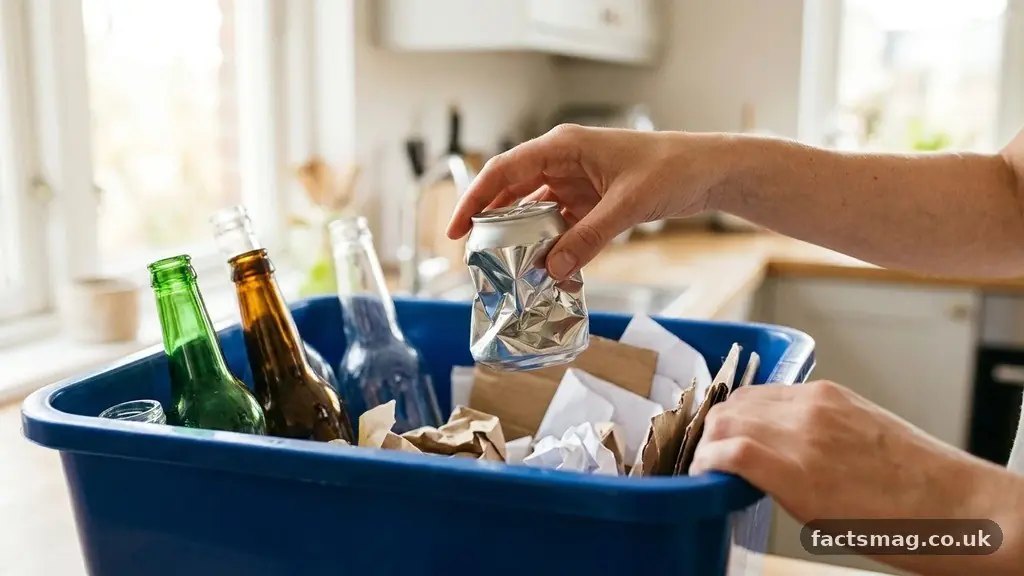
How Does Recycling Help Protect the Environment It does so by replacing some demand for newly extracted raw materials with materials recovered from products people have already used. A recycled aluminium can, for example, supplies metal for a new product without requiring the entire process of mining and refining fresh aluminium ore.
This creates several connected benefits. Recycling reduces pressure on forests, mines, oil and gas reserves, and other natural systems; it also lowers the amount of waste sent to disposal sites. The exact result varies by material, local technology, transport distance, and the quality of the recycling programme.
Recycling also supports landfill diversion. Keeping paper, metals, glass, plastics, and other recoverable materials out of landfills preserves disposal capacity and reduces the chance that valuable resources will be buried permanently. Organic waste needs a different route, such as composting, because food scraps and garden material are usually better processed through biological recovery than conventional recycling.
The strongest environmental strategy uses a hierarchy rather than treating recycling as the first answer to every purchase. Avoiding unnecessary products, reusing what already exists, repairing damaged items, and sharing seldom-used goods generally prevent more waste than recycling those items later.
- Reduce: Buy fewer disposable products and avoid excess packaging where practical.
- Reuse: Choose refillable, durable, repairable, or second-hand items.
- Recycle: Place accepted materials in the correct collection stream.
- Compost: Separate suitable food and yard waste for organic recovery.
- Recover: Use specialised systems for materials that require controlled processing.
That combination explains why recycling matters without overstating it. It is one part of a broader pollution prevention system, and its value grows when communities design products and services to create less waste in the first place.
Recycling Conserves Natural Resources
Every new product begins with materials taken from the natural world or extracted from previously processed resources. Mining metal, drilling for petroleum, harvesting timber, and collecting sand or other minerals can disturb habitats, consume water, and create waste before a product ever reaches a shop.
Recycling changes the starting point. A paper mill using recovered fibre may need less freshly harvested timber, while a metal processor using scrap can reduce reliance on newly mined ore. The outcome is not a total replacement for natural resource extraction, because recovered material can be contaminated, degraded, or unavailable in the required quantity.
Aluminium shows why material choice matters. It can be recycled repeatedly without losing its basic properties, so a used can can become part of another can or another aluminium product. Steel, copper, glass, and some paper grades also retain significant value after use, although each requires a different sorting and processing method.
Plastic is more complicated. Some plastics can be mechanically recycled into new products, but heat, sunlight, additives, food residue, and mixed polymer types can reduce quality. A bottle may become a lower-grade item rather than another bottle, and some flexible or multilayer packaging is difficult to process in ordinary municipal systems.
| Material | What recovery can provide | Key environmental relevance |
|---|---|---|
| Aluminium | Feedstock for new cans and manufactured goods | Reduces dependence on bauxite mining and energy-intensive primary production |
| Steel | Metal for construction, vehicles, appliances, and containers | Reduces demand for newly processed iron ore and associated industrial waste |
| Paper and cardboard | Recovered fibre for packaging and paper products | Can reduce pressure on timber resources and lower disposal volumes |
| Glass | Cullet for new containers and glass products | Substitutes for some virgin raw materials in glass manufacturing |
| Selected plastics | Pellets, fibres, containers, or composite products | Can reduce demand for virgin plastic where collection and processing are suitable |
Resource conservation is especially important as cities grow and consumption rises. Recycling cannot make an unlimited supply of materials, but it can help societies use existing supplies more carefully and keep valuable feedstocks moving through the economy.
It Saves Energy and Can Lower Emissions
Manufacturing from recovered materials often requires less energy than producing the same material from virgin resources. The difference comes from avoiding or reducing stages such as mining, refining, smelting, logging, pulping, and high-temperature processing of raw inputs.
Aluminium is a familiar example because primary aluminium production is particularly energy intensive. Recycling aluminium avoids much of the energy required to turn bauxite into usable metal, which is why keeping cans and other aluminium items in the recovery stream has a strong environmental rationale.
Energy savings can also occur with steel, paper, glass, and some plastics, although the size of the benefit depends on the manufacturing process and the material’s condition. A recycling plant still uses electricity and fuel, so the honest comparison is between the full recycling pathway and the full pathway for making a product from virgin material.
Lower energy demand can reduce greenhouse gas emissions when the energy system includes fossil fuels. That reduction contributes to a smaller carbon footprint for some products, but it should not be presented as a universal fixed number. Electricity sources, transport distances, collection methods, processing efficiency, and market conditions all affect the result.
Transport deserves attention because recovered material is often collected from many households and businesses before reaching a sorting or processing facility. A well-designed route can move large quantities efficiently, while unnecessary hauling or shipping low-value material long distances can weaken the environmental case.
The environmental value of recycling therefore depends on system design. Clean collection streams, nearby end markets, efficient equipment, and manufacturers willing to buy recycled feedstock all help translate potential energy savings into real-world emissions reductions.
People can support that system by following local instructions rather than putting every vaguely recyclable object into one bin. Correct sorting reduces rejected loads, protects workers and machinery, and helps processors produce material that manufacturers can actually use.
Recycling Reduces Landfill Pressure and Pollution
Landfills are engineered facilities, not simply open holes in the ground, but they still require land, construction, monitoring, and long-term management. Sending less material to them can extend their operating life and reduce the need to build new disposal capacity near communities.
Waste buried in a landfill can also create environmental management challenges. Organic material decomposes without much oxygen and may generate methane, a powerful greenhouse gas, while liquids moving through waste can form leachate that must be collected and treated. Modern landfill controls reduce these risks, but prevention remains preferable to managing avoidable waste.
Recycling is most useful for materials that retain a clear market value after use. Metals, cardboard, paper, glass, and certain rigid plastics can often be sorted and sold to processors, whereas heavily soiled packaging or mixed-material products may have little practical recovery value.
Pollution prevention begins before the bin. Reducing disposable purchases means fewer products need collection, transport, sorting, and processing, and choosing reusable items can prevent repeated waste from entering the municipal solid waste stream at all.
Improper disposal creates separate risks. Batteries, electronics, paint, chemicals, and some appliances can contain substances that require special handling, so they should not be placed in ordinary recycling or rubbish bins unless the local programme specifically accepts them.
Recycling facilities also need responsible operation. Dust control, stormwater management, fire prevention, worker protection, and careful handling of rejected material all influence the total environmental outcome. A facility that recovers valuable material while managing residues safely is more effective than a system that simply collects large volumes without a reliable processing plan.
There is a community benefit, too. Cleaner streets, fewer overflowing bins, and less litter reaching waterways are visible results of better waste management, although litter prevention still depends heavily on product design, public behaviour, enforcement, and adequate collection services.
Recycling Supports a Circular Economy
A linear economy follows a simple path: extract resources, make products, use them, and discard them. A circular economy tries to keep products, components, and materials useful for as long as possible through durability, maintenance, repair, reuse, remanufacturing, and recycling.
Recycling sits near the end of that hierarchy, but it is still important. Once an item can no longer be reused or repaired, recovering its material can prevent the useful parts from being lost. A damaged steel appliance, for instance, may still provide metal even though the appliance itself has reached the end of its working life.
Businesses can strengthen circular systems by designing products that are easier to disassemble and sort. Using fewer material types, labelling components clearly, avoiding inseparable coatings, and making replacement parts available can improve both product life and eventual recovery.
Manufacturers also create demand for recycled content. If packaging companies, carmakers, builders, and consumer-goods producers purchase recovered feedstock, recycling facilities have a clearer market for what they collect. Without buyers, even technically recyclable material may be stored, downgraded, exported under strict rules, or disposed of.
Reuse and recovery are not identical. Reuse keeps an item functioning in roughly its existing form, while recovery usually extracts material or energy after the original use. A refillable bottle that is washed and used again generally preserves more of the original product than melting it down for another application.
That distinction helps households make better decisions. Donating a sound coat, repairing a chair, or refilling a container may avoid the energy and processing needed to recycle the object. Recycling becomes the sensible next step when continued use is no longer safe, practical, or hygienic.
Local governments also influence circularity through procurement rules, deposit systems, repair programmes, composting services, and requirements for recycled content. These policies can turn individual actions into stable markets and more predictable infrastructure.
Why Contamination and Collection Rules Matter
Recycling contamination occurs when unwanted items, food residue, liquids, plastic bags, or incorrect materials enter a recycling load. Contamination can lower the quality of recovered material, damage sorting equipment, expose workers to hazards, and cause an entire batch to be rejected.
Rules differ because recycling facilities use different machinery and sell material to different processors. One municipality may accept a particular plastic container, while another may lack the equipment or local buyer needed to handle it. The recycling symbol on packaging does not automatically mean that an item belongs in a household collection bin.
Residents should check the instructions provided by their council, waste authority, or collection company. Rinsing containers, keeping paper dry, flattening cardboard where requested, and never placing loose plastic film in a sorting line can improve the quality of a load.
“Wish-cycling” feels optimistic but often causes harm. Putting an uncertain item into the bin in the hope that someone will figure it out may create extra sorting work or contaminate otherwise valuable material.
Some materials need special drop-off points rather than curbside collection. Electronics, batteries, textiles, scrap metal, used motor oil, and household chemicals may have separate reuse and recovery pathways that protect people and the environment more effectively.
Recycling access also matters. Not every household has dependable collection, nearby drop-off sites, storage space, or clear information, and those gaps can make responsible disposal difficult. Strong programmes pair public instructions with convenient services, realistic acceptance lists, and investment in modern recycling facilities.
The U.S. Environmental Protection Agency’s recycling basics and benefits resource explains common material pathways and why reducing, reusing, and recycling work best together. It is a useful starting point, but local rules should always take priority for bin decisions.
What Individuals and Communities Can Do
Personal action matters most when it focuses on preventing waste and using the correct disposal route. A household that buys a durable product, repairs it, reuses it, and then recycles its materials has a stronger environmental impact than one that purchases several disposable substitutes and recycles only at the end.
Start with the waste produced most often. If takeaway cups, food scraps, delivery packaging, or worn clothing fill the bin each week, changing those specific habits is more useful than chasing a perfect zero-waste lifestyle that is difficult to maintain.
- Carry a refillable bottle or cup for purchases that would otherwise create repeated single-use packaging.
- Plan meals and store food properly to reduce edible waste before composting becomes necessary.
- Use repair shops, alteration services, libraries, tool-sharing schemes, and second-hand markets.
- Keep recyclables dry and empty, and follow the exact local list for accepted materials.
- Take batteries, electronics, chemicals, and other restricted items to approved collection points.
- Choose products with recycled content, minimal packaging, and parts that can be replaced.
Businesses can improve results by separating cardboard, metals, food waste, and general rubbish at the point of use. Clear signs near bins, staff training, and contracts with reputable collectors reduce confusion and make recovery more consistent.
Schools, apartment buildings, and neighbourhood groups can focus on shared barriers. A well-placed food-scrap collection point, a repair event, or a textile reuse drive may prevent more waste than a one-time awareness poster.
Consumers can also ask practical questions before buying. Is the item durable? Can it be repaired?
Is the packaging made from one material or several bonded layers? Does the local system accept it after use?
These decisions connect household behaviour with larger markets. Manufacturers respond to demand, local authorities respond to participation and contamination rates, and recycling facilities perform better when they receive clean, predictable material streams.
Limits, Trade-Offs, and Better Expectations
Recycling is beneficial, but it is not automatically the best environmental choice in every case. Collecting a low-value material across long distances, processing it with energy-intensive equipment, and finding no reliable buyer can produce limited gains compared with reducing or reusing the product.
Plastic illustrates the limits clearly. Many plastics are technically recyclable, yet colours, additives, labels, food residue, and mixed materials can make actual recovery difficult. Even when plastic is recycled, the resulting material may be suitable for fewer applications and may eventually require disposal.
Paper fibres also have limits. Fibres become shorter each time they are processed, so recovered paper usually needs some combination of fresh fibre and recycled fibre to maintain strength. Recycling still reduces pressure on raw materials, but it does not create an endlessly renewable supply of paper.
Glass and metal generally offer strong recovery potential, yet they are heavy, so collection and transport systems must be efficient. A local deposit programme, commercial collection route, or well-designed processing network can produce a different result from scattered collection with long journeys.
Economic conditions influence outcomes as well. Prices for recovered commodities rise and fall, and a material that has a buyer this year may face weaker demand later. Stable policy, recycled-content requirements, producer responsibility schemes, and investment in processing capacity can help protect recycling from sudden market changes.
The right expectation is neither cynicism nor blind optimism. Recycling is a valuable tool for resource conservation and landfill diversion, while waste reduction, reuse, composting, clean energy, responsible product design, and pollution prevention address problems that recycling cannot solve alone.
That balanced view answers How Does Recycling Help Protect the Environment without pretending every bin has the same effect. It helps most when the material is genuinely recoverable, the collection stream is clean, the processor has a responsible end market, and the action replaces the need for new production.
Frequently Asked Questions
Does recycling really reduce greenhouse gas emissions?
It can, especially when recycled materials replace energy-intensive virgin resources such as newly mined metals or freshly produced plastics. The size of the reduction depends on the material, energy source, transport, processing method, and whether the recovered material is actually used in a new product.
Is recycling better than reusing an item?
Usually, reuse comes first because it preserves the product in its existing form and avoids some manufacturing and processing. Recycling is valuable once an item is broken, worn out, unsafe, or no longer practical to use, provided the material is accepted and can be recovered.
What is recycling contamination?
Recycling contamination means unwanted or unsuitable material has entered a recycling load. Common examples include food-covered containers, liquids, plastic bags, batteries, and items that the local facility cannot process; contamination can reduce quality and cause loads to be rejected.
Why can’t every item with a recycling symbol go in the bin?
The symbol may describe the type of plastic or indicate that a manufacturer designed the package for potential recovery, but it does not guarantee that local facilities accept it. Collection systems depend on available equipment, processors, markets, and local rules.
What should households do with food scraps?
Use a local composting service, garden compost system, or council food-waste collection where available. Composting turns suitable organic material into a useful soil amendment and keeps it separate from dry recycling, where food residue can cause contamination.
Small Choices, Real Environmental Gains
Recycling helps protect the environment by conserving resources, saving energy, reducing landfill pressure, and supporting lower-pollution production. Its results improve when people reduce unnecessary purchases, reuse durable goods, compost organic waste, and follow local collection instructions carefully.
The answer to How Does Recycling Help Protect the Environment is therefore practical rather than perfect: keep materials useful, prevent waste where possible, and place remaining items in the right recovery stream. Start with one recurring source of waste at home or work, then build from there.